
AI Automation
Agencies Aren’t Dying—They’re Getting an Upgrade


The 2025 GRIT report sent a shiver through the industry: 34% of clients say DIY tools have reduced their reliance on agencies. But the narrative that “AI will finish the job” is fundamentally wrong.
Brains vs. Brawn
Historically, clients felt forced to choose:
- DIY Platforms: Provided the “brawn”—speed and affordability for simple, routine tasks.
- Agencies: Provided the “brains”—strategic flexibility, depth, and the ability to interpret complex signals.
The End of the Trade-off
The rise of specialist, domain-trained AI has handed the “brawn” back to the experts. Agencies can now combine decades of mastery with platform-level speed.
- Conviction Over Charts: A platform gives a client a chart. An agency gives them the conviction to make a $100m brand acquisition bet.
- Marking Your Own Homework: Without an agency, internal teams often fall into self-fulfilling feedback loops.
Only pay
when you win
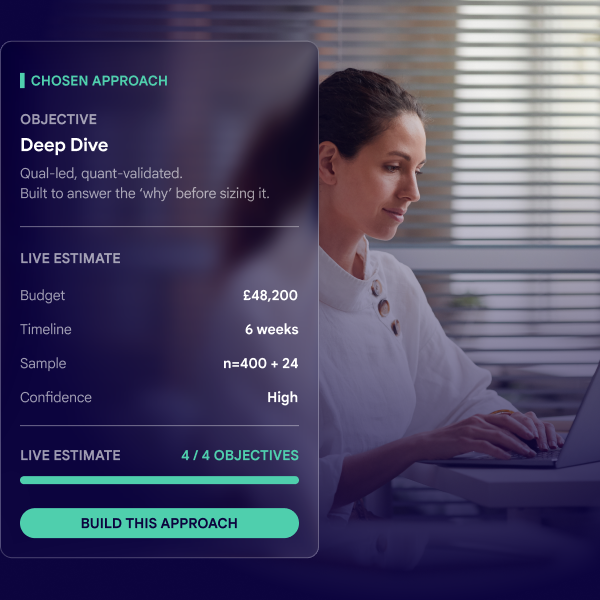
Get the AI market research platform your team needs. For Free.
Proposals stay free, so you don't pay for the groundwork. You'll only pay for completed projects.
Related articles
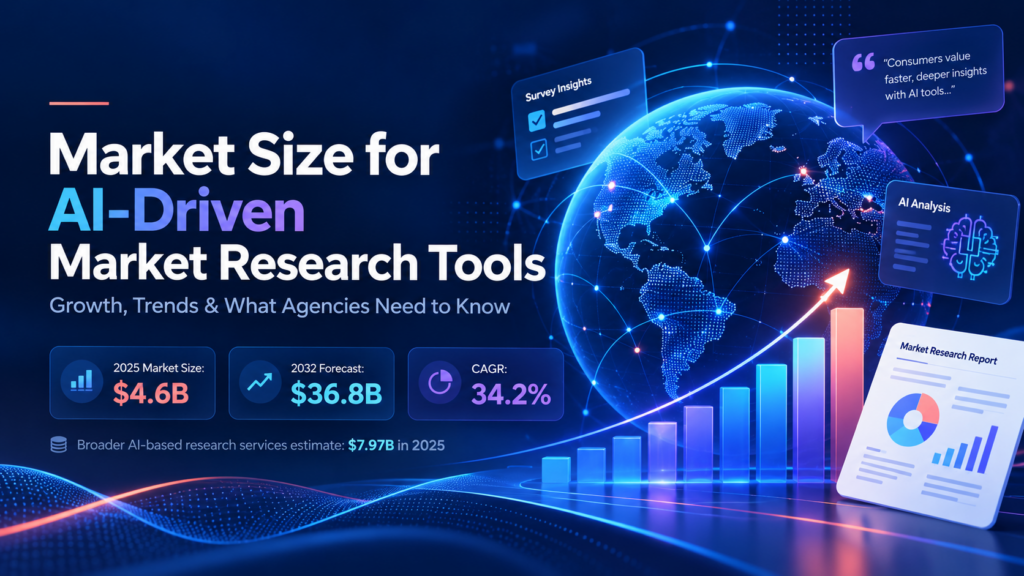
Market Size for AI-Driven Market Research Tools: Growth, Trends and What Agencies Need to Know

AI has moved from experiment to everyday practice in market research. Researchers now use it to draft surveys, analyse qualitative data, code open-ended responses, review interview transcripts, structure reports and automate repetitive research tasks. Demand for AI tools for market…
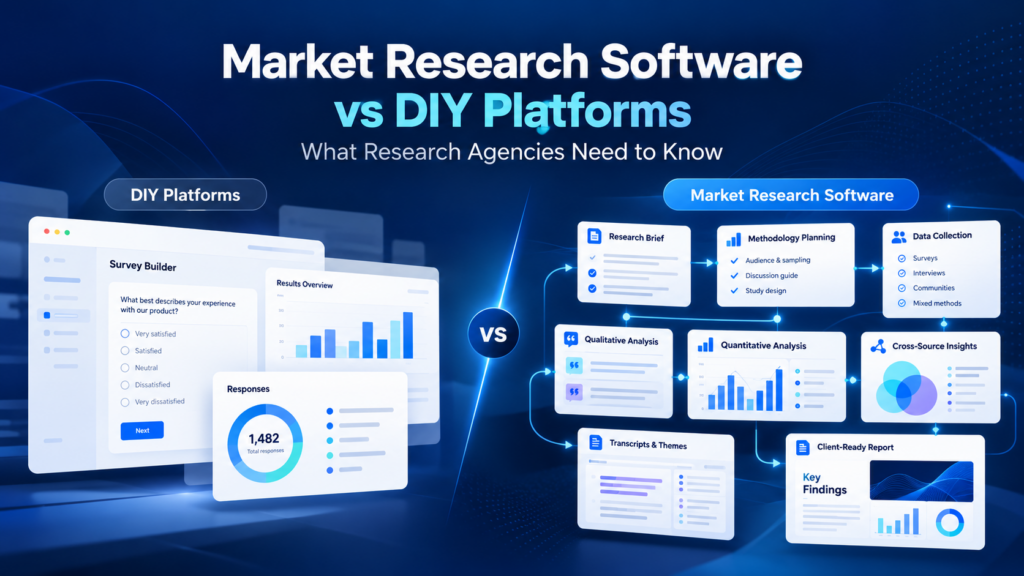
Market Research Software vs DIY Research Platforms: What Research Agencies Need to Know
Launching a survey has never been easier. A marketing manager can write a questionnaire, buy panel sample and watch responses arrive on a dashboard before lunch. That is genuinely useful, and it has changed what clients can do for themselves….
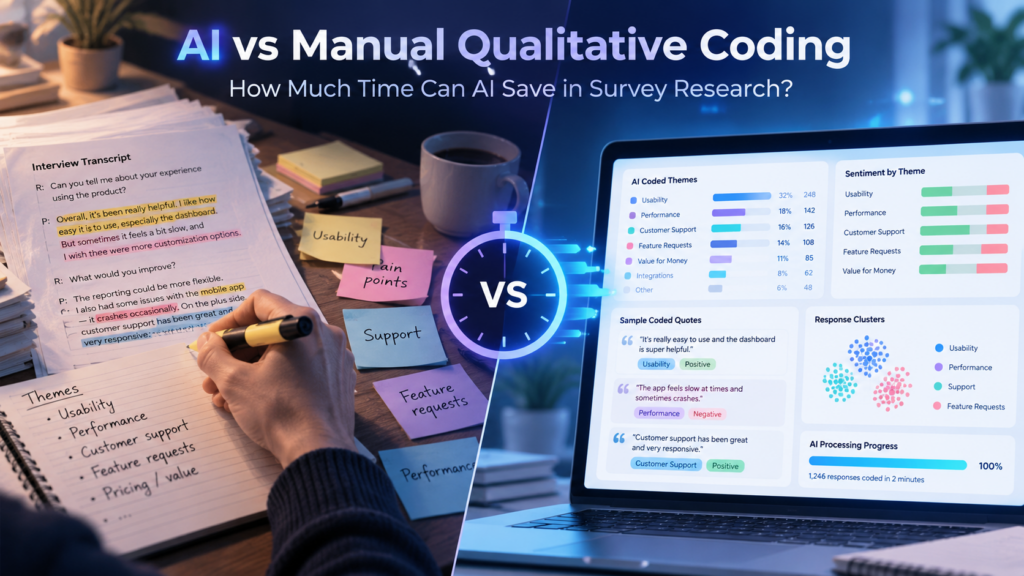
AI vs Manual Qualitative Coding: How Much Time Can AI Save in Survey Research?
Many research projects move quickly through fieldwork and then slow down. Hundreds of open-ended responses arrive, or a stack of interview transcripts, and someone has to make sense of them. Traditionally, qualitative coding means researchers read every response, identify themes,…