
AI Automation
Context is Everything: Why Research is an End-to-End Reasoning Process


Most people who are disappointed with general AI in research are actually suffering from a “lack of context”.
The “Blank Slate” Problem
General AI starts fresh every time. It knows what “Brand Equity” is, but it doesn’t know about the failed relaunch in 2019 or the leadership team’s specific risk appetite.
Research as a Chain Reaction
Market research isn’t a series of isolated tasks; it’s an end-to-end reasoning process.
- Interdependence: How you frame the brief shapes the methodology, which shapes the data, and ultimately the decision.
- The Contextual Edge: Specialist AI is designed to retain information across the project—from brief to final output—so every step is informed by the last.
Great research lives in layers. AI reads the surface, but only an integrated system—pairing humans with specialist tech—understands the depth.
Only pay
when you win
Get the AI market research platform your team needs. For Free.
Proposals stay free, so you don't pay for the groundwork. You'll only pay for completed projects.
Related articles
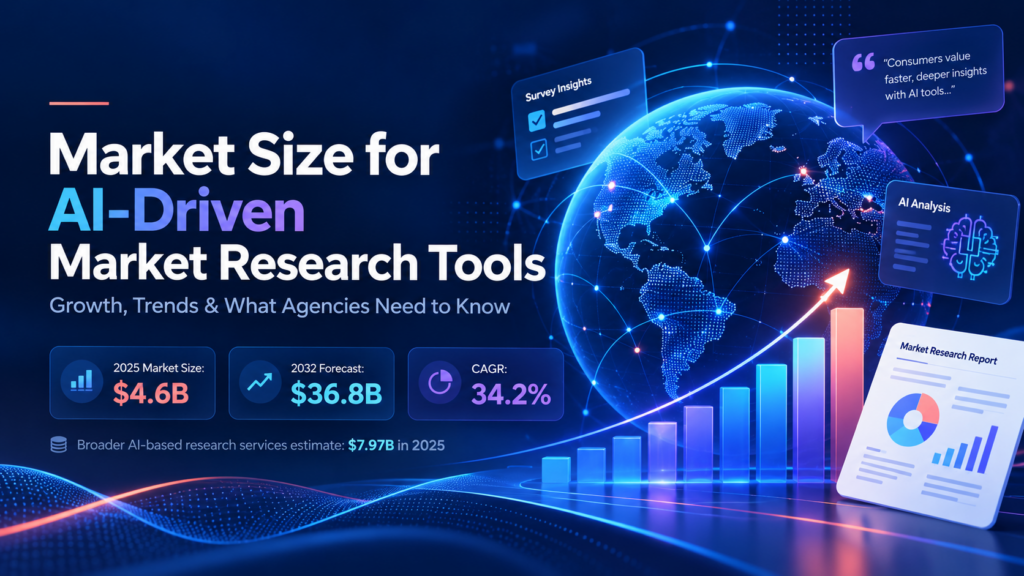
Market Size for AI-Driven Market Research Tools: Growth, Trends and What Agencies Need to Know

AI has moved from experiment to everyday practice in market research. Researchers now use it to draft surveys, analyse qualitative data, code open-ended responses, review interview transcripts, structure reports and automate repetitive research tasks. Demand for AI tools for market…
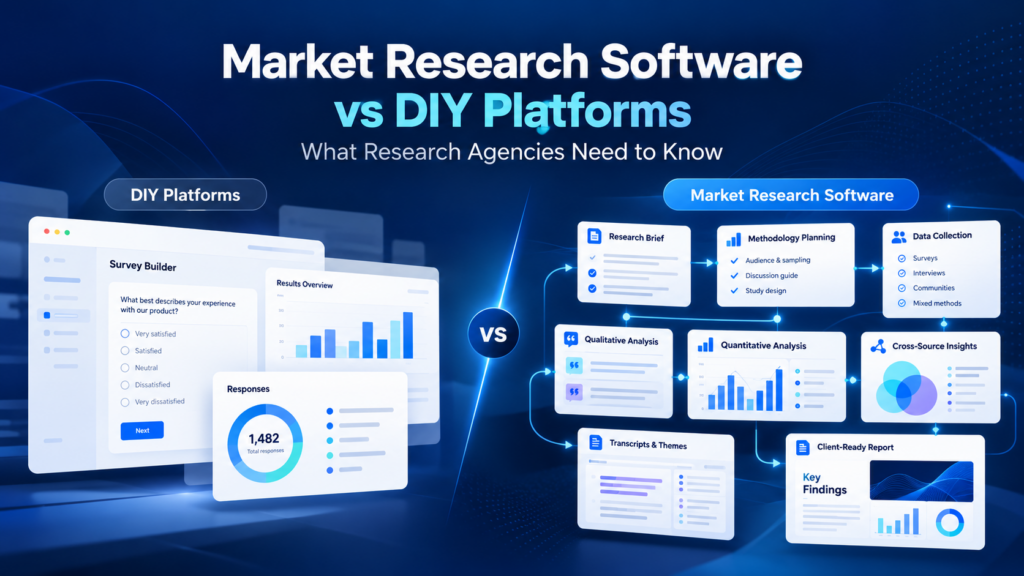
Market Research Software vs DIY Research Platforms: What Research Agencies Need to Know
Launching a survey has never been easier. A marketing manager can write a questionnaire, buy panel sample and watch responses arrive on a dashboard before lunch. That is genuinely useful, and it has changed what clients can do for themselves….
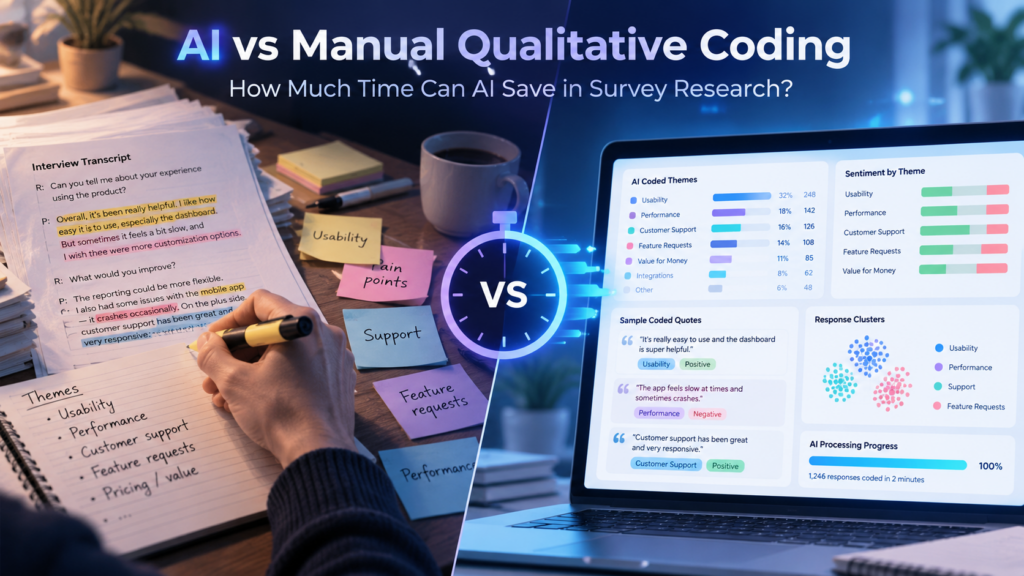
AI vs Manual Qualitative Coding: How Much Time Can AI Save in Survey Research?
Many research projects move quickly through fieldwork and then slow down. Hundreds of open-ended responses arrive, or a stack of interview transcripts, and someone has to make sense of them. Traditionally, qualitative coding means researchers read every response, identify themes,…