
AI Automation
The Best AI Tool for Summarizing Market Research: What Actually Works


Every market research agency wants faster reporting. The promise of an AI tool to do market research summaries in minutes rather than days is incredibly appealing. But there’s a critical difference between summarising and synthesising—and the best AI tool for summarizing market research understands this distinction.
Summarising vs. Synthesising: Why It Matters
A summary compresses information. A synthesis connects it. Most general-purpose AI tools—even the most advanced AI tools in 2026—default to summarisation. They’ll tell you the top three themes from a focus group transcript, but they won’t connect those themes to the quantitative data from your survey, or to the strategic objectives in the original brief.
The best AI market research tool doesn’t just shrink your data—it builds a narrative across data sources, methodologies, and project phases.
What to Look For in a Market Research AI Tool
When evaluating the best AI tool for summarizing market research, consider these criteria:
- Cross-Method Integration: Can it pull insights from both qualitative transcripts and quantitative datasets simultaneously?
- Brief Awareness: Does it know what question the client originally asked? Without this context, every summary is disconnected from the strategic purpose.
- Hierarchical Insight: Great research summaries work at multiple levels—executive headline, strategic implication, and supporting evidence. The best market research AI tool generates all three.
- Source Attribution: Can it trace every claim back to specific respondent quotes or data points? This is non-negotiable for agency credibility.
AI Marketing Tools 2026 Updates: The Summarisation Arms Race
The AI marketing tools 2026 updates reveal a clear trend: every platform now claims ‘AI-powered insights.’ But most are retrofitting summarisation features onto tools that were built for something else entirely—campaign management, social listening, or CRM.
A dedicated AI tool to do market research summarisation is purpose-built for the task. It understands research structures, respects methodological boundaries, and produces output that researchers can actually present to clients without heavy editing.
The Bottom Line for Agencies
If your team is spending hours turning transcripts and data tables into coherent reports, the right AI market research tool can transform that workflow. But choose carefully—the best AI tool for summarizing market research should make your researchers faster without making their work shallower.
The goal isn’t to replace the analyst—it’s to give them a first draft that’s already 80% of the way there, grounded in the right data, and structured around the right questions.
Only pay
when you win
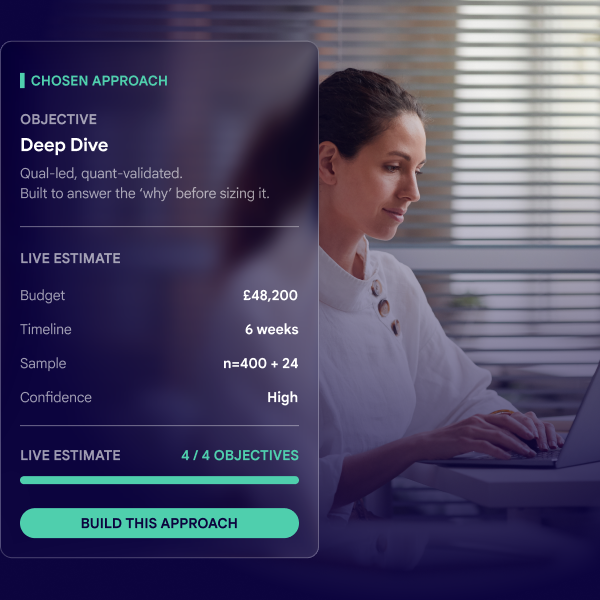
Get the AI market research platform your team needs. For Free.
Proposals stay free, so you don't pay for the groundwork. You'll only pay for completed projects.
Related articles
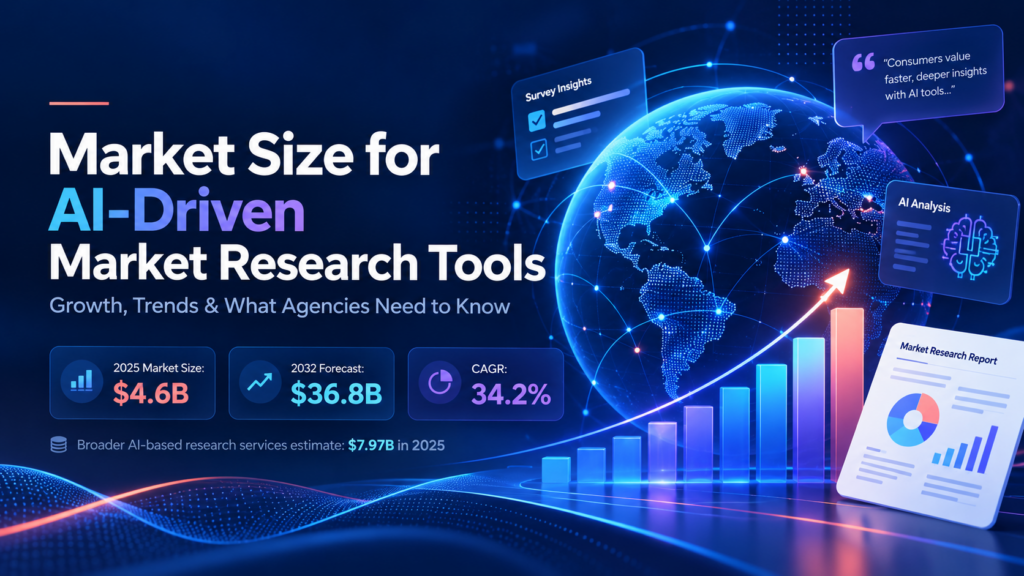
Market Size for AI-Driven Market Research Tools: Growth, Trends and What Agencies Need to Know

AI has moved from experiment to everyday practice in market research. Researchers now use it to draft surveys, analyse qualitative data, code open-ended responses, review interview transcripts, structure reports and automate repetitive research tasks. Demand for AI tools for market…
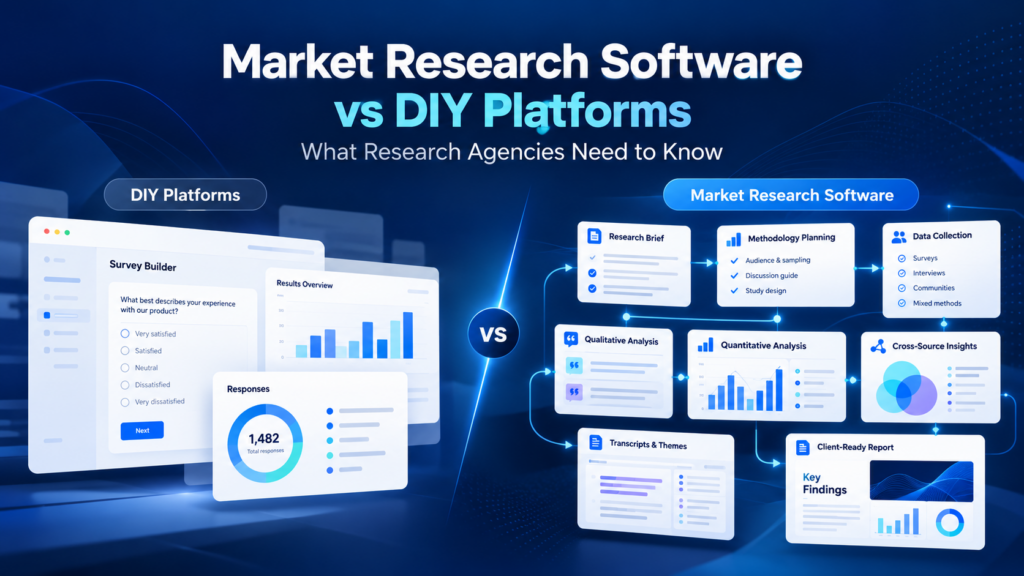
Market Research Software vs DIY Research Platforms: What Research Agencies Need to Know
Launching a survey has never been easier. A marketing manager can write a questionnaire, buy panel sample and watch responses arrive on a dashboard before lunch. That is genuinely useful, and it has changed what clients can do for themselves….
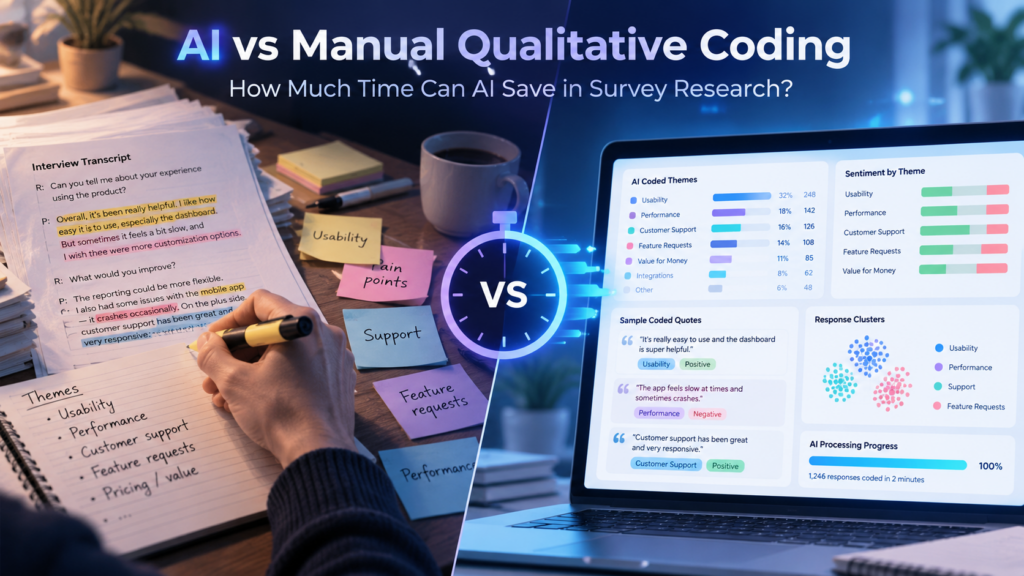
AI vs Manual Qualitative Coding: How Much Time Can AI Save in Survey Research?
Many research projects move quickly through fieldwork and then slow down. Hundreds of open-ended responses arrive, or a stack of interview transcripts, and someone has to make sense of them. Traditionally, qualitative coding means researchers read every response, identify themes,…